Federal Judge Temporarily Blocks Trump’s Proposed ‘Anti-Weaponization Fund’
A federal judge has temporarily halted the Trump administration’s efforts to establish a proposed $1.8 billion Anti-Weaponization Fund, marking the latest legal challenge surrounding one of the administration’s most closely watched initiatives.
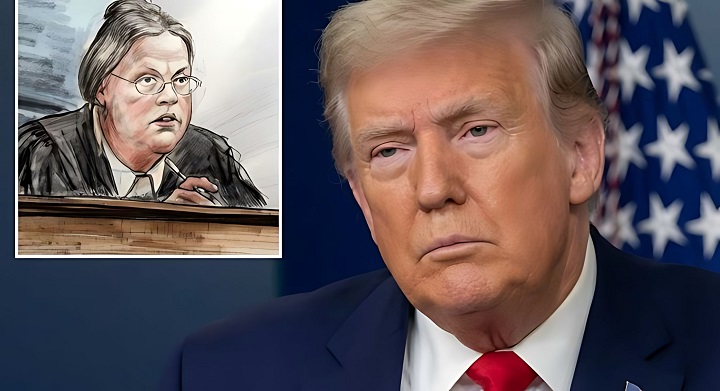
The ruling, issued by U.S. District Judge Leonie Brinkema in Virginia, prevents the administration from moving forward with any aspect of the programme while the court considers whether a longer-term injunction should be imposed.
Court Freezes Implementation
In her order, Judge Brinkema directed the administration to immediately stop all work related to the proposed fund.
That includes transferring money into the fund, reviewing compensation claims submitted by applicants, and distributing any payments until further notice.
The judge also scheduled a hearing for June 12, when both sides will present arguments over whether the temporary order should be extended while the broader legal dispute continues.
The decision effectively pauses the programme before any compensation can be approved or distributed.
What Is the Anti-Weaponization Fund?
According to the Trump administration, the proposed $1.8 billion fund was designed to compensate individuals whom officials believe were unfairly targeted or subjected to politically motivated actions by federal agencies in previous years.
Supporters of the programme argue it represents an effort to restore public trust by providing restitution to those they believe suffered government misconduct.
However, opponents contend that the initiative raises significant legal and constitutional questions, particularly regarding who would qualify for compensation and whether Congress has authorised the funding.
A broad coalition of plaintiffs has challenged the programme in federal court, arguing that the criteria for receiving compensation are unclear and could unfairly exclude many individuals with similar claims.
Funding Sparks Political Debate
The proposed fund has also become the centre of a heated political battle on Capitol Hill.
Questions have been raised about whether Congress formally appropriated the $1.8 billion needed to finance the programme, with critics arguing that such a significant expenditure requires clear legislative approval.
The controversy intensified after reports indicated that attorneys representing individuals charged or convicted in connection with the January 6, 2021, attack on the U.S. Capitol were exploring whether their clients might qualify for compensation through the fund.
Although no payments have been made, the possibility quickly became a major point of contention between Republicans and Democrats.
Democratic Amendment Rejected
During a recent meeting of the House Rules Committee, Representative Jim McGovern of Massachusetts introduced an amendment intended to prevent anyone charged or convicted in connection with the Capitol riot from receiving compensation through the proposed fund.
Presenting the amendment, McGovern argued that taxpayer money should never be used to compensate individuals prosecuted for their involvement in the events of January 6.
He also proposed requiring the Attorney General to publicly disclose any payments made through the programme, arguing that transparency would be essential if the fund were ultimately allowed to proceed.
McGovern described the proposal as necessary oversight, calling the fund a “secret slush fund” that deserved greater public scrutiny.
Republicans Vote Down Proposal
The Republican-controlled Rules Committee ultimately rejected McGovern’s amendment, preventing the measure from advancing to the House floor.
Following the vote, McGovern criticised the decision on social media, accusing Republicans of refusing to debate whether January 6 defendants should be eligible for compensation.
The vote further underscored the deep partisan divide surrounding both the proposed restitution fund and broader questions involving the federal government’s response to the Capitol riot.
Republicans have generally defended the administration’s efforts to review claims of alleged government misconduct, while Democrats argue the programme lacks sufficient oversight and accountability.
Broader Political Disagreements Continue
The dispute surrounding the Anti-Weaponization Fund reflects continuing disagreements between the two parties over criminal justice, law enforcement, and the role of the federal government.
Republicans have frequently criticised Democratic support for criminal justice reforms, arguing that some policies have weakened public safety and reduced accountability for offenders.
Democrats, meanwhile, have defended many of those reforms as necessary efforts to address systemic inequities within the criminal justice system while also advocating for police accountability alongside public safety initiatives.
Immigration policy has also remained a major source of political disagreement, with Republicans continuing to criticise sanctuary city policies and Democratic immigration proposals, while Democrats argue their approach balances border security with humanitarian concerns.
Separate Housing Bill Advances
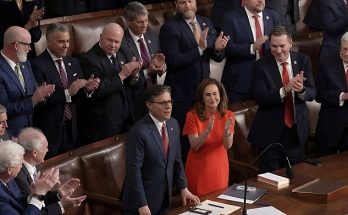
While debate over the restitution fund continued, lawmakers also achieved a rare bipartisan breakthrough on housing legislation.
The House overwhelmingly approved the amended 21st Century ROAD to Housing Act by a vote of 396-13, sending the measure to the Senate for further consideration.
Supporters say the legislation is intended to increase access to affordable housing, encourage homeownership, reduce costs for prospective buyers, and limit the ability of large institutional investors to purchase single-family homes in bulk.
House leaders described the bill as a response to growing concerns over housing affordability affecting families across the country.
Speaker Mike Johnson said rising home prices and limited housing supply have become challenges facing millions of Americans regardless of political affiliation.
Legal Fight Far From Over
For now, the future of the Anti-Weaponization Fund remains uncertain.
Judge Brinkema’s temporary order does not resolve the underlying legal questions but instead preserves the status quo while the court considers whether the programme can move forward under federal law.
The upcoming hearing is expected to determine whether the administration will be allowed to resume work on the fund or whether the legal pause will remain in place as the broader case proceeds through the courts.
Until then, all activity connected to the proposed compensation programme remains suspended, ensuring that no claims are reviewed and no payments are issued while the litigation continues.